


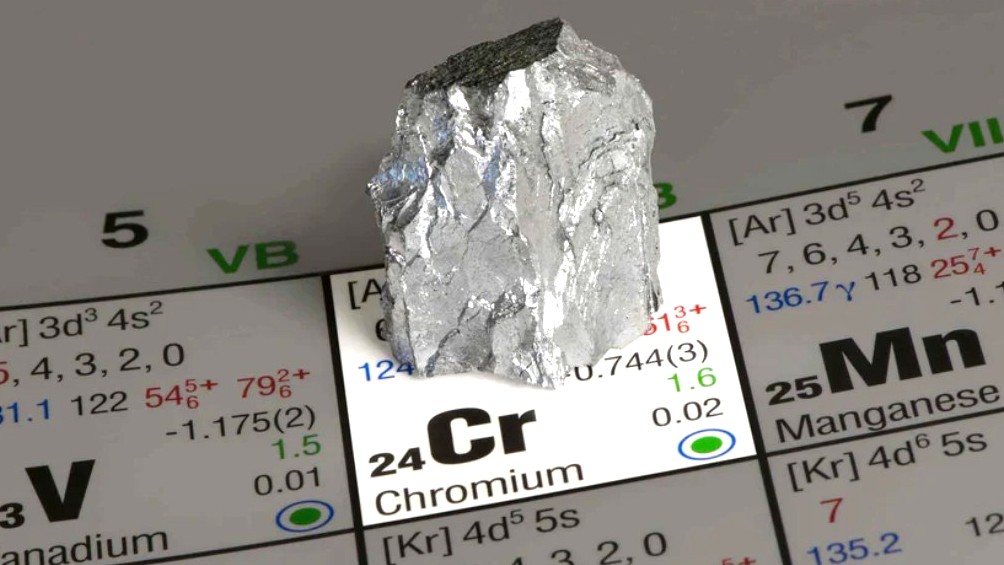
Hexavalent chromium (Cr⁶⁺) present in cement is a substance classified as hazardous to human health that can be naturally present in raw materials used to produce cement, such as:
- Iron ore
- Clays
- Slag
- Alternative fuels
During the calcination process in furnaces at over 1400°C, part of the trivalent chromium (Cr³⁺), which is not very soluble and less toxic, can oxidize and turn into hexavalent chromium (Cr⁶⁺), which is:
- Highly soluble in water
- Toxic and sensitizing to the skin
- Responsible for contact dermatitis among construction workers (e.g. cement workers, bricklayers), skin irritations and chronic allergic reactions.
By law, European companies must limit water-soluble chromium VI to a maximum of 2 parts per million (2 ppm) in ready-to-use cement. To comply with this limit, industries add reducing agents, such as ferrous sulfate, which transform hexavalent chromium into trivalent chromium, a harmless form.
NB: Directive 2003/53/EC (amendment of 76/769/EEC) prohibits the sale and use of cements containing soluble Cr⁶⁺ in concentrations above 2 ppm (0.0002%), without the addition of reducing agents.
To verify compliance with the Cr⁶⁺ limit, laboratory analyses are carried out according to EN 196-10: Method for determining the soluble content of chromium VI in cement.
Reducing additives used in cement
To reduce hexavalent chromium to trivalent chromium already inside the cement, reducing additives inserted during clinker grinding are used. The main ones are:
1. Ferrous Sulphate Heptahydrate (FeSO₄·7H₂O)
- Most Used
- Effective, cost-effective and compatible with the cement process
- Typical dosage: 0.2 – 0.5% by weight on concrete
- It must be protected from moisture, otherwise it will degrade and lose effectiveness
2. Stannous sulfate (SnSO₄)
- Very effective, even at lower dosages (~0.01 – 0.05%)
- More expensive, but used where you want better stability over time
- More stable than ferrous sulphate
3. Reducing sugars (glucose, fructose)
- Greener alternative, but less used on an industrial scale
- Limited stability, more expensive
4. Sodium metabisulfite (Na₂S₂O₅)
- Effective, but less stable over time
- Sensitive to moisture and oxygen
Summary
| Reducing Additive | Benefits | Cons |
| FeSO₄·7H₂O (ferrous sulfate) | Economical, easy to use | Not very stable to humidity |
| SnSO₄ (stannous sulfate) | High effectiveness and stability | More expensive |
| Reducing sugars | Natural, ecological | Less stable and more expensive |
| Na₂S₂O₅ (metabisulfite) | Good efficacy | Degrades easily to air |