

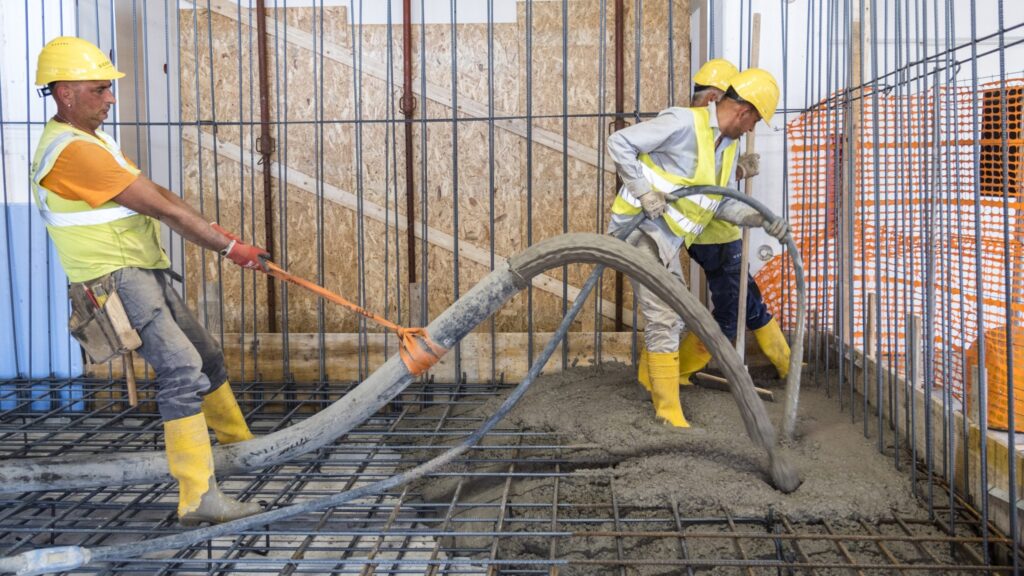
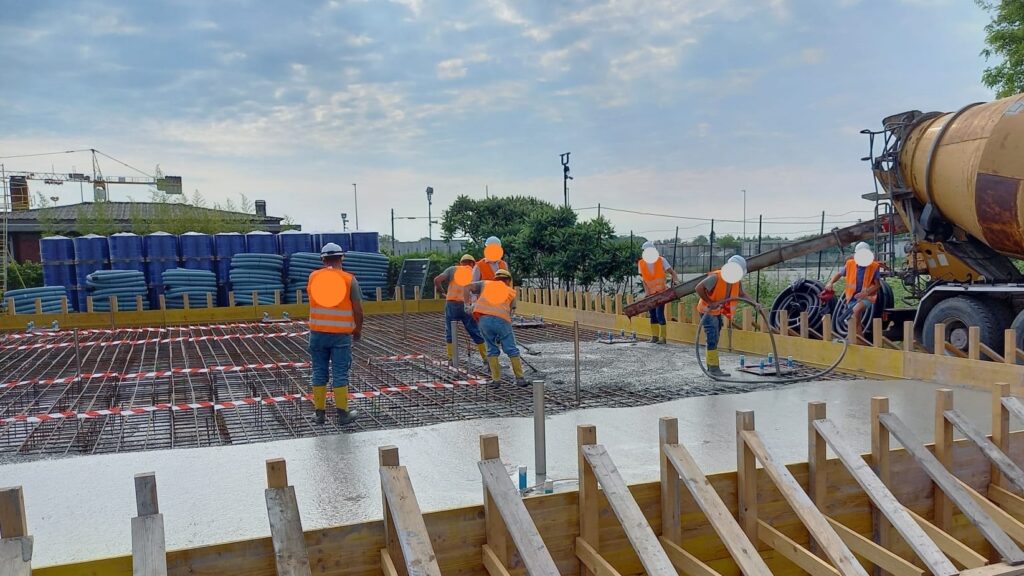
In the field of large infrastructure and industrial works, the management of massive castings represents one of the most complex technical challenges for concrete batching plants. Deep foundations, large slabs, dams, port structures and thick structures require extremely precise control of the thermal behavior of the concrete during the curing phases.
The main problem is related to the heat of hydration developed by the cement during the chemical reaction with water. In massive castings, the accumulation of heat inside the structure can generate strong thermal differences between the internal core and the external surfaces, causing tensions that increase the risk of cracking and compromise the durability of the work.
Why thermal control has become strategic in massive jets
The evolution of technical regulations and the growing attention to the durability of structures are imposing increasingly higher standards in the management of massive castings. At the same time, the spread of cements with a low clinker content and more sustainable formulations changes the thermal behavior of the mix design, introducing new variables to be controlled:
- different setting times;
- uneven thermal development;
- changes in hydration kinetics;
- greater sensitivity to environmental conditions.
For concrete batching plants, it is therefore essential to design mixtures capable of guaranteeing thermal stability without compromising workability and mechanical resistance.
Operational strategies in concrete batching plants
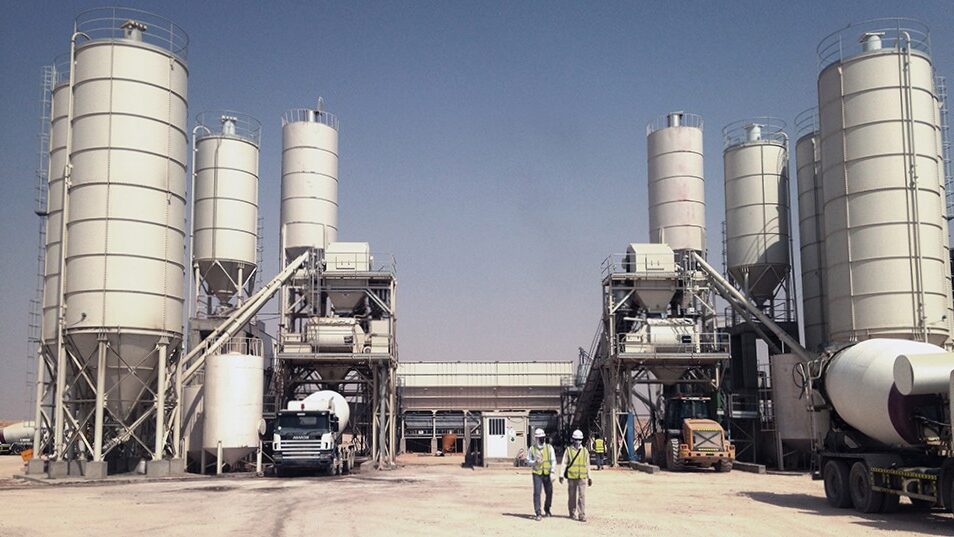
The management of heat of hydration today requires an integrated approach that involves both the mix design and the production organization of the plant. The main strategies adopted include:
- use of cements with low heat of hydration;
- optimization of the water/cement ratio;
- use of mineral additions;
- temperature control of aggregates and water;
- planning of casting times;
- continuous monitoring of ripening temperatures.
The precision of the dosage also plays a decisive role: small variations in the quantities of binder or admixtures can significantly influence the thermal behavior of the concrete.
The role of additives in controlling ripening
In this context, technological additives represent a fundamental tool to improve the management of massive jets. The solutions developed by EKAN support concrete batching plants in designing more stable and efficient mix designs, helping to control hydration kinetics and improve concrete workability even in the most critical applications.
The use of specific additives makes it possible to:
- reduce the risk of thermal cracking;
- improve the homogeneity of the dough;
- maintain workability for longer;
- optimize the water/cement ratio;
- increase the production stability of the mix design.
These aspects are particularly important on large infrastructure construction sites, where business continuity and reliable performance are essential.
Sustainable innovation and durability of concrete works
Proper heat management of hydration is not only about the immediate quality of the jet, but directly affects the durability of the entire structure in the long run. Reducing cracking phenomena means increasing the useful life of the works, limiting maintenance interventions and improving the overall sustainability of the project.
For concrete batching plants, the current challenge is therefore to combine technological control, production efficiency and environmental sustainability. In this scenario, the integration of automation, advanced mix design and advanced concrete admixtures is one of the most effective tools to address the new needs of the modern construction sector and to better manage massive castings.